Aussiedoodle Dog Profile: Temperament, Size, Lifespan, Puppy Costs and Care
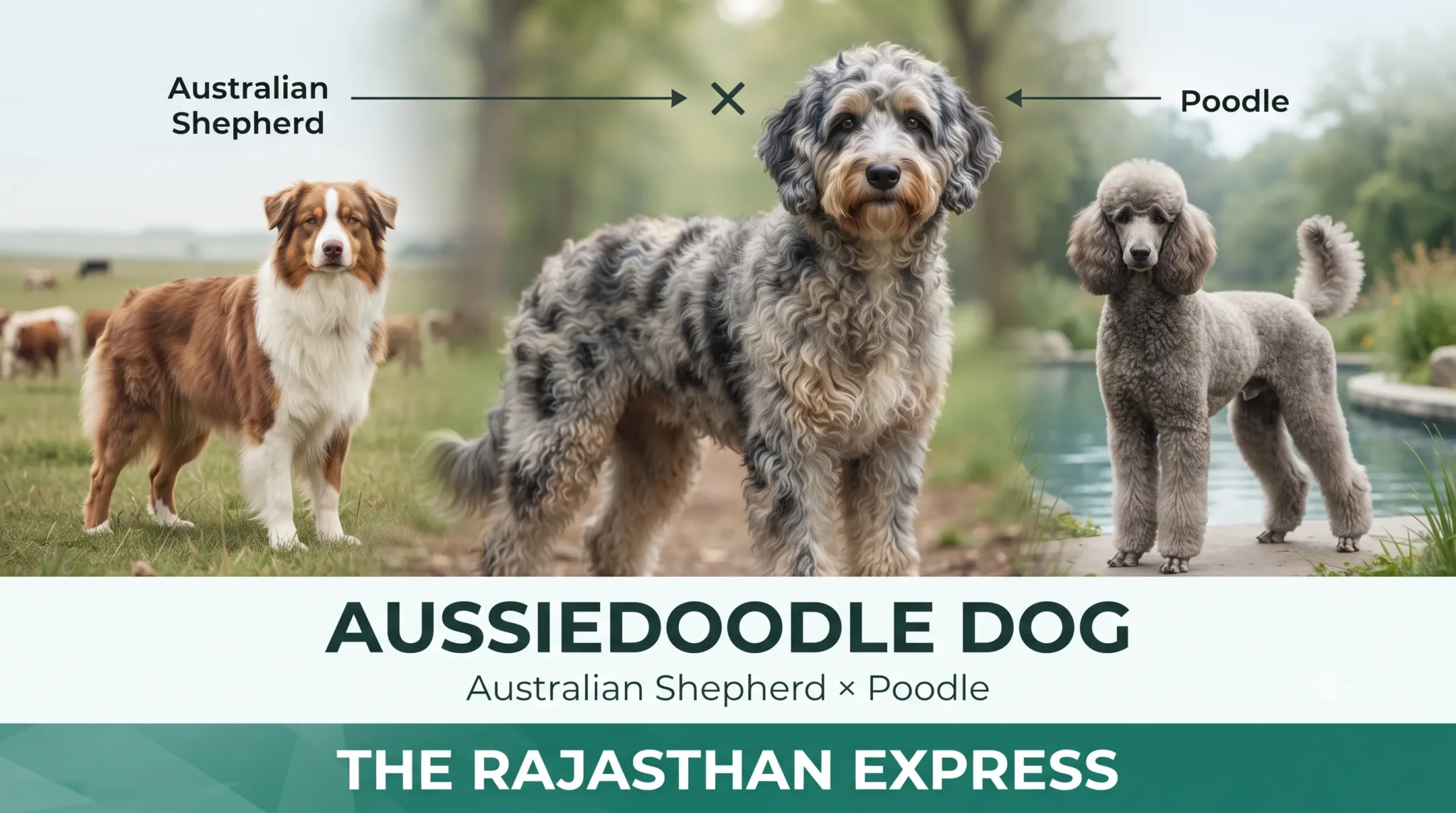
The Aussiedoodle is an clever, loving and lively hybrid companion created by crossing an Australian Shepherd with a Poodle. Appreciated for its playful personality, attractive coat and strong attachment to family members, this hybrid has become particularly sought-after among dog enthusiasts. Aussiedoodles can be found in various sizes, including standard, toy and miniature varieties. Their appearance, behaviour and grooming requirements can differ significantly depending on their parent breeds. Whether planning to welcome young Aussiedoodles or bringing home a mature dog, becoming familiar with their personality, activity needs, potential health concerns and lifetime expenses is essential for meeting their ongoing care needs.
What Is an Aussiedoodle?
An Aussiedoodle dog, also known as an Aussiepoo or Aussiepoodle, brings together characteristics of the Australian Shepherd and Poodle. The Australian Shepherd provides herding instincts, athletic ability and alertness, while the Poodle offers intelligence, trainability and the possibility of a lower-shedding coat. However, inheritance is unpredictable, meaning puppies from the same litter can develop noticeably different physical features and temperaments. Aussiedoodles are crossbreeds rather than officially recognised purebred dogs. Their recognition increased alongside greater enthusiasm for designer companion dogs during the closing decades of the twentieth century and beginning of the twenty-first. Today, they are especially popular with active households seeking an enthusiastic canine companion.
Aussiedoodle Personality Traits
The usual Aussiedoodle personality is loving, clever, lively and particularly receptive to attention from people. These dogs frequently establish close emotional bonds with their families and enjoy participating in everyday routines. Many are enthusiastic learners, making training built around rewards particularly effective. Their Australian Shepherd ancestry may contribute to herding behaviours, including following moving objects or attempting to guide other animals. Socialisation from puppyhood helps puppies become more comfortable around unfamiliar people, environments and pets. Because Aussiedoodles require considerable attention and stimulation, extended periods alone can increase the likelihood of excessive barking, restlessness or destructive chewing. Each dog's temperament nevertheless reflects genetics, upbringing and experience.
Characteristics of Miniature Aussiedoodles
The small-sized Aussiedoodle is frequently chosen by owners who are looking for a more compact dog without losing the breed's intelligence and lively nature. A mini Aussiedoodle often reaches approximately 12 to 18 inches at the shoulder and weighs around 15 and 40 pounds, although individual measurements vary. These dogs typically inherit their smaller proportions through Miniature Poodle ancestry. Despite their manageable size, they retain considerable energy and benefit from regular exercise, structured training and activities that stimulate their minds. A mini Aussiedoodle may be suitable for a property with limited space when its daily activity requirements are properly addressed. Potential owners should remember that miniature does not necessarily mean a relaxed personality or minimal care requirements.
What Does a Fully Grown Aussiedoodle Look Like?
A fully grown Aussiedoodle can vary considerably in height and weight depending on its parental traits. Standard varieties typically stand approximately 18 to 25 inches at the shoulder and weigh between 40 and 70 pounds. Toy varieties are much smaller, while miniature dogs fall between the two size categories. Most Aussiedoodles possess well-built frames, bright eyes and soft fur that may be straight, wavy or curly. Typical colour variations include black, cream, chocolate, red and blue merle, along with mixed patterns with white or tan patches. Adult size cannot always be determined precisely from a young puppy's appearance, so the parents' height and weight provide useful guidance.
Training Aussiedoodle Puppies from an Early Age
Bringing up Aussiedoodle puppies calls for a patient approach, regular guidance and predictable daily routines. Early development should include carefully managed introductions to varied household noises, unfamiliar people, different walking surfaces and appropriate social experiences. Positive reinforcement promotes good habits while developing a positive relationship between puppy and owner. Essential training cues such as sit, stay and recall provide an important foundation for future training. An Aussiedoodle puppy also benefits from appropriate chew toys, supervised play and predictable rest periods. House training should start during puppyhood, with frequent opportunities to toilet outdoors. Puppies need activity suited to their development rather than intensive physical activities, because their immature joints are still developing.
Daily Activity Needs of Aussiedoodles
Aussiedoodles typically possess high energy levels and enjoy activities that challenge both body and mind. Adult dogs in good health may do well with approximately 60 to 90 minutes of daily activity, tailored to body size, physical condition, age and guidance from a vet. Walking, supervised running, retrieving games and suitable agility activities can provide valuable exercise. Mental enrichment is equally important because mentally active breeds may become frustrated when their daily routines offer little variety. Puzzle feeders, scent games and short training sessions help maintain mental engagement. Owners should build up strenuous exercise progressively and watch for signs of discomfort. Consistent stimulation encourages more settled behaviour and can build a closer connection between an Aussiedoodle and its family.
Grooming Requirements for Aussiedoodles
Although some Aussiedoodles inherit fur with reduced shedding, their grooming requirements can be substantial. Wavy or tightly curled coats may form uncomfortable mats without frequent maintenance. Grooming the coat several times a week, and sometimes daily, helps maintain coat condition and prevents matting. Grooming by a trained professional may also be required depending on coat length and structure. Regular grooming should include examining the ears, maintaining nail length, brushing teeth and checking for skin irritation. It is important to recognise that, no Aussiedoodle is certain to avoid triggering allergies. People with allergies to dogs may experience reactions to proteins in saliva, skin particles and other substances regardless of how much an individual dog sheds.
Aussiedoodle Health and Expected Lifespan
The commonly reported Aussiedoodle life expectancy is commonly placed at 10 to 15 years, although longevity varies on inherited health, access to veterinary treatment, diet and daily habits. Possible hereditary health problems include joint problems such as hip dysplasia, inherited eye conditions, epilepsy and sensitivity to aussiedoodle puppy particular medicines. Responsible breeding programmes should take account of relevant genetic screening, joint assessments and eye examinations. Merle-patterned coats needs special consideration because breeding two merle carriers can raise the likelihood of significant hearing difficulties and eye abnormalities in offspring. Routine health checks with a vet, recommended immunisations, parasite prevention and weight management are valuable for long-term well-being. Owners should also provide nutritious food matched to the dog's life stage, body size and exercise requirements.
Aussiedoodle Puppies for Sale and Buying Considerations
Families considering available Aussiedoodle puppies should prioritise responsible breeding practices rather than appearance or unusually low prices. Breeders should share reliable details about the parents' health, the puppies' environment, veterinary checks and early development. Seeing the young dog in person and, if circumstances allow, its mother can help future owners assess behaviour and welfare. Anyone considering a miniature Aussiedoodle puppy for sale should be careful with misleading claims concerning eventual height and weight, compatibility with allergies or expected personality. Purchase prices can vary widely according to location, breeding standards, parental health testing and additional considerations. Buyers must also plan financially for food, grooming, training, veterinary treatment and equipment over the dog's lifetime.
Is an Aussiedoodle Suitable for Your Family?
An Aussiedoodle can prove to be an enjoyable family dog for households that maintain active lifestyles and frequent engagement with their animals. These dogs often thrive when welcomed into household routines and provided with regular learning experiences. They may coexist happily with children and other animals when early introductions are managed carefully and suitable training and supervision are provided. However, their intelligence, grooming requirements and potential herding behaviours can require extra commitment from less experienced owners. People thinking about either a full-sized or smaller Aussiedoodle should evaluate their daily schedule, budget and capacity to meet ongoing care requirements before deciding to adopt or buy.
Understanding Aussiedoodle Ownership
The Aussiedoodle brings together a clever nature, loving temperament and athletic energy in a distinctive crossbreed companion. From the lively full-sized Aussiedoodle to the smaller mini Aussiedoodle, each variety has its own personality traits and specific care needs. Learning about adult size, grooming responsibilities, health risks and early training needs helps future owners choose responsibly. With responsible breeding, appropriate exercise, positive training and regular veterinary attention, an Aussiedoodle can become a devoted and enjoyable family companion for many years.
Comments on “Trending Useful Information on aussiedoodle You Should Know”